


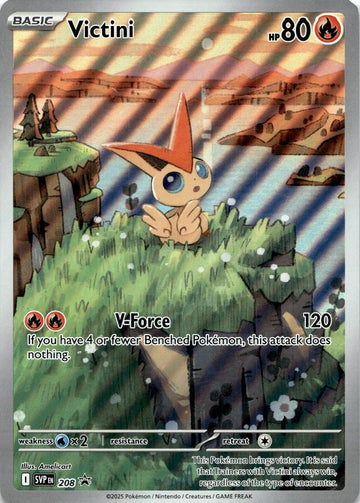

Grading Pokémon cards: Beckett, CGC and PSA in Europe
Having a valuable Pokémon card graded is the way to officially record its condition, protect your card and increase its value. Until now, that often meant hassle for Dutch collectors: sending cards insured to the United States, waiting for customs and weeks to months of patience. That changes in 2026, because market leader PSA is opening its first European location. In this extensive guide we explain everything: how grading works, what your card is assessed on, what it costs, how to submit, which choice suits you best — and what PSA's arrival in Europe means for you.
In short
- Grading = your card is assessed on condition, centering, corners/edges and surface, and sealed in a slab with a grade from 1 to 10.
- The big three: PSA (best known, best resale), CGC (stricter, cheaper/faster) and Beckett/BGS (with sub-grades).
- Costs range from ~€15 (bulk) to hundreds of euros (express); turnaround from 1–2 weeks to several months.
- PSA opens a location in Frankfurt in summer 2026 — no more shipping to the US and no more import duties.
- Grading pays off mainly for valuable and vintage cards; for cheap cards usually not.
What is grading and why do it?
With grading, you send your card to an independent company that professionally assesses its condition. Based on that, the card receives a grade on a scale from 1 (poor) to 10 (gem mint), after which it is sealed in a sturdy, transparent plastic holder — the so-called slab. The slab has a label showing the grade, the card name and a unique certificate number.
Why would you do that? A slabbed card with a high grade is protected against damage, has an objectively established condition (no more discussion when selling) and is therefore usually worth considerably more than the same card ungraded. For collectors and investors, grading is a way to safeguard, display and get a return on their finest cards.
What is your card assessed on?
Grading companies look at four key points. Together they determine the final grade.
Centering. How evenly the image sits on the card, measured by the white borders. A card that is clearly cut off-centre loses points — even if it is otherwise perfect.
Corners. Sharp, undamaged corners are crucial. Even tiny "whitening" or blunted corners are reflected in the grade.
Edges. The sides must be smooth and clean, without fraying, damage or white spots.
Surface. Scratches, fingerprints, print lines, small dents or a dull holo layer all count. The surface is often where that one point is lost.
Assess it yourself first
Look at your card under bright light and tilt it slowly. That way you will see scratches, print lines and irregularities that are invisible in normal light. Check the centering with a ruler or by looking at the white borders.
The grade from 1 to 10 explained
Most companies use a scale from 1 to 10. The top end is what it is all about:
- 10 – Gem Mint: virtually perfect on every point. The highest achievable grade and by far the most valuable.
- 9 – Mint: almost perfect, with at most one tiny imperfection.
- 8 – NM-Mint: almost as new, with very light wear.
- 6–7: good condition with visible but limited signs of use.
- 1–5: clear wear or damage; usually only interesting for very rare or vintage cards.
The difference between a 9 and a 10 seems small, but in value it can be a world of difference — especially with sought-after cards.
PSA, CGC or Beckett — the big three
There are several grading companies, but three names dominate the market. Each has its own strengths.
PSA is the best known worldwide and enjoys the most trust on the market. For vintage and expensive cards, a PSA slab usually brings the highest sale value — a Base Set Charizard in PSA 10, for example, consistently sells for more than with other companies.
CGC is known for being stricter in its assessment: a card that would get a 10 at PSA sometimes scores a 9.5 at CGC. On the other hand, CGC is often cheaper and faster, which makes it a smart choice for cards of moderate value.
Beckett (BGS) is loved for its sub-grades: alongside an overall grade you get partial grades for each aspect. The coveted Black Label (a perfect 10 on all sub-grades) is the ultimate goal for many collectors.
There are also smaller players such as SGC. They can be cheaper or faster, but on the Pokémon market they usually deliver somewhat less resale value than the big three.
Quick advice
Expensive or vintage cards? Choose PSA for the best resale. More modern cards of average value? Then CGC's lower costs and speed are often more attractive.
What does it cost and how long does it take?
The price depends on the company, the chosen speed and (with PSA) the value of the card. Roughly speaking:
- CGC starts at around $15 per card for bulk submissions.
- PSA starts at around $25 per card (value tier) plus an annual membership; faster services go up to several hundred dollars per card.
- Beckett also has rates ranging from bulk to premium, depending on speed.
For turnaround, expect 1 to 3 months for standard service, while express options are often ready within 1 to 2 weeks. The faster the service, the higher the rate. Until now, Dutch collectors also had to add shipping and possible import costs — and that is exactly what changes in 2026.
PSA comes to Europe: location in Frankfurt
This is the news many European collectors have been waiting for: PSA is opening its first full grading location in Europe, in Frankfurt (Germany), expected in the summer of 2026. Frankfurt was chosen because of its central location in the European transport network.
For you as a Dutch collector, this is a game changer. You will no longer need to send your cards to the United States, with all the shipping costs, customs hassle and long waiting times that entails. Grading within Europe means: less hassle, lower barriers and expected faster turnaround times. PSA is building a full team there and has appointed its own European management.
What this means for you
Want to have cards graded by PSA? It may pay to wait until the European location opens — less shipping risk, no import duties and probably your slabs back faster. Keep an eye on PSA's official announcements for the exact start date and rates.
Grading from the Netherlands: how does it work?
Until the European location opens, as a Dutch collector you have roughly two routes. The first is submitting directly to the US: you create an account with the grading company, fill in a form and send your cards insured. In that case, expect shipping costs and possible import duties on their return.
The second, often cheaper route goes through a Dutch intermediary or a group submission. Several collectors bundle their cards in one shipment, so the shipping and import costs per card are considerably lower. It takes a bit more turnaround time, but saves money and hassle.
With PSA coming to Frankfurt, that trade-off becomes a lot simpler: grading within the EU simply removes the biggest barriers — overseas shipping and customs.
Is grading worth it?
Not every card is worth grading. The cost and effort must be in proportion to what it yields. A few rules of thumb help you choose.
Do grade: valuable, rare and vintage cards. With top cards, a high grade can multiply the value considerably — a perfect PSA 10 of a sought-after card is sometimes worth many times the same copy ungraded. Think of vintage holos, 1st Edition cards and sought-after alternate arts.
Usually do not grade: cheap or common cards. If a card is worth little ungraded, you rarely earn back the grading costs. Good to know: the added value of a PSA 10 on modern cards has become smaller recently, while on vintage cards it remains large.
Honest and level-headed
Rates, turnaround times and the exact details of the PSA location in Europe may change — always check the latest information with the grading company itself. Moreover, grading never gives a guaranteed grade: even a card that looks perfect to you can lose points on a detail.
Which card has a chance of a high grade?
Before you pay for grading, it pays to take a critical look at your card yourself. That way you avoid spending money on a card that will not get a high grade anyway.
Go through the four assessment points: is the centering neat (compare the white borders top/bottom and left/right), are the corners sharp, are the edges clean and is the surface free of scratches and print lines? Look at the card under bright light and with a magnifying glass or your phone's zoom. If you have doubts about the centering or the surface, the chance of a 10 is small — and you would do better to choose a cheaper service or keep the card ungraded.
A handy intermediate step: some companies and tools offer a pre-grade or estimation service, so you get an indication of the expected grade in advance.
How to submit your card (step by step)
- Choose a company and service. Based on value and desired speed, decide whether to go for PSA, CGC or Beckett, and which rate (bulk, regular or express).
- Create an account on the grading company's website and fill in the submission form with the details and (often) the estimated value of your card.
- Protect the card. Put it in a penny sleeve with a semi-rigid card saver — not a hard toploader, as those are awkward for the graders to open.
- Send insured. Always send your package insured and well packed; with expensive cards that is no unnecessary luxury.
- Wait. The company assesses your card, assigns a grade and seals it in a slab.
- Receive your slab. You get the slabbed card back, ready to store, display or sell.
Common mistakes when grading
- Submitting cheap cards. The costs are then often higher than the added value.
- "Cleaning" a card. Polishing or wiping can actually damage the surface and costs points.
- Using a hard toploader for submission. Use a semi-rigid card saver; toploaders are for storage.
- Ignoring centering. Many cards look great but are cut just off-centre — check this in advance.
- Choosing the wrong service. Too expensive for a cheap card, or too slow if you want to sell it quickly.
How to protect and store your card
Whether you have it graded or not: protection is half the work. A card you store well keeps its condition — and that very condition later determines the grade and the value.
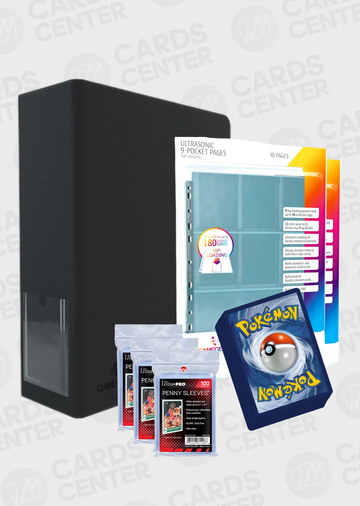
For submission to a grading company you usually use a penny sleeve with a semi-rigid card saver around it (not a hard toploader — those are hard to remove). For everyday protection and storing your collection, sleeves and toploaders are ideal: they keep dirt, moisture and fingerprints away. Store cards upright, cool and out of direct sunlight.
Below are a few protection supplies we have in stock:
-29%

Sleeves
Ultra PRO Card Sleeves (100 pcs)
Regular price
€0,89
Sale price
€1,25

Toploader
Ultra PRO 3" x 4" Clear Regular Toploaders (25 pieces)
Regular price
€2,99
1 in stock

Pocket Page
Protect your collection
Sleeves, toploaders and more — everything to store your cards so they keep their value.
Go to all productsFrequently asked questions
What does a PSA 10 mean?
A 10 ("gem mint") is the highest achievable grade: the card is in virtually perfect condition in terms of centering, edges, corners and surface. Such a grade usually brings the highest value.
PSA or CGC — which should I choose?
For expensive and vintage cards, PSA is usually the best choice for resale. For more modern cards of average value, CGC's lower costs and faster turnaround are often more attractive.
Is PSA really coming to Europe?
Yes. PSA is expected to open a full grading location in Frankfurt, Germany, in the summer of 2026. As a result, European collectors no longer need to ship to the US.
How long does grading take?
With standard service usually 1 to 3 months; express options are often ready within 1 to 2 weeks, at a higher rate.
Is it worth having cheap cards graded?
Usually not. With cheap or common cards, you rarely earn back the grading costs. Grading pays off mainly for valuable and rare cards.
How do I best protect a card for shipping?
Use a penny sleeve with a semi-rigid card saver. Hard toploaders are fine for storage, but less suitable for submission to a grader because they are awkward to open.
Previous
Why the Pokémon market is booming (and why you should buy now)
Next
Lorcana Wilds Unknown: Pixar comes to Lorcana
Also interesting...

Lorcana Wilds Unknown: Pixar comes to Lorcana
May 16 2026


How do I start collecting Pokémon cards?
Feb 23 2023

The 8 most expensive Pokémon Cards of all time
Feb 22 2023

